
How Water Temperature Affects Your Pool: Algae Growth, Chlorine Efficiency & Seasonal Care Tips
When most people think about pool care they think in terms of seasons—busy in summer, quieter in winter. But water temperature affects your pool every day of the year. Whether it’s preventing algae blooms in warm weather or keeping chlorine active through colder months, understanding how temperature affects water chemistry is one of the most important parts of pool ownership.
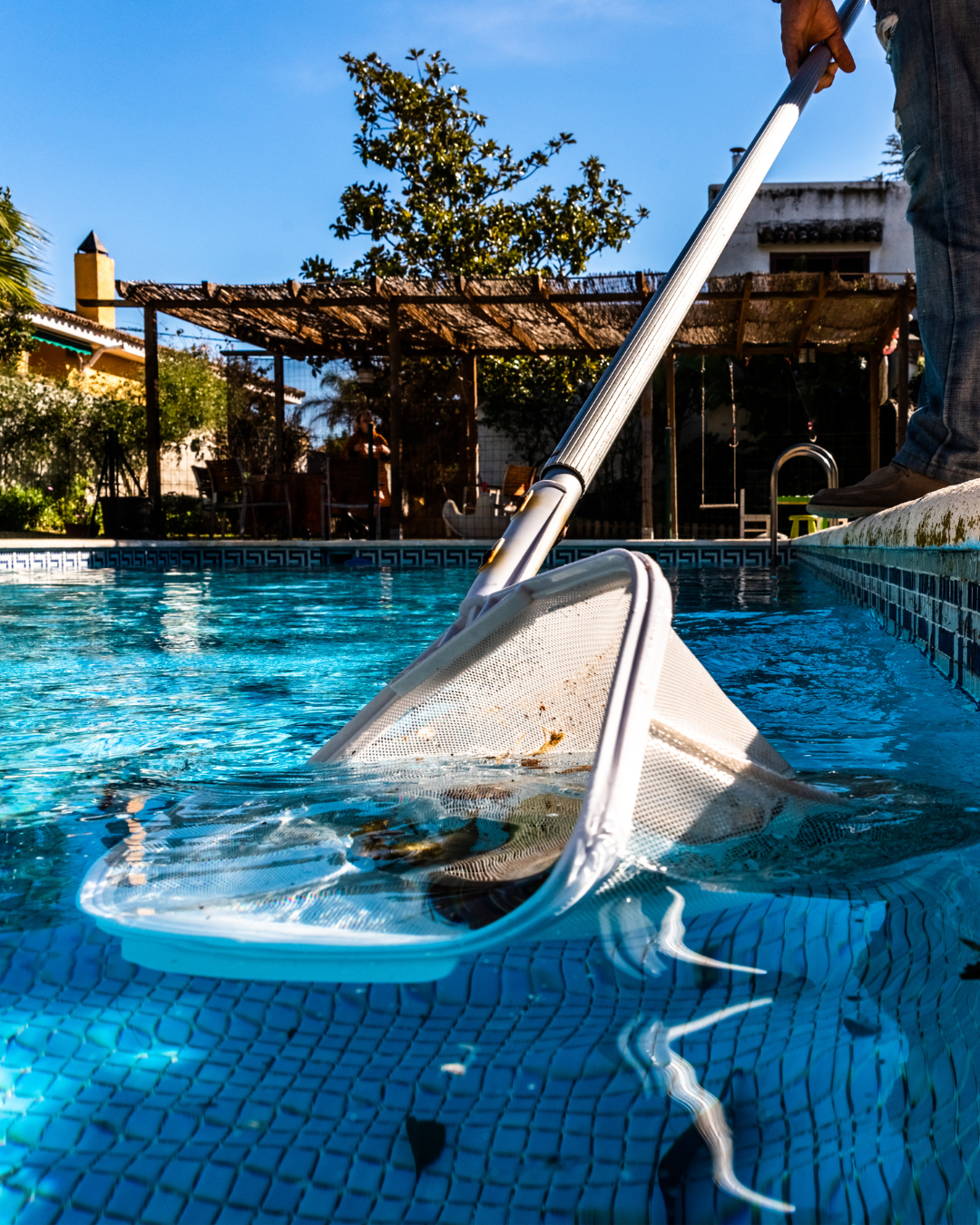
Here’s a complete breakdown of how temperature changes your pool’s behavior and what you can do to stay ahead of problems in every season.
Warm Weather: The Perfect Conditions for Algae Blooms
As temperatures rise, so does the risk of algae growth. Warm water creates an ideal environment for algae to reproduce rapidly—especially when combined with:
- Long, sunny days
- Lower chlorine levels
- Heavy swimming activity
- Debris and pollen in the water
- High pH or low circulation
Research published in Temperature effects on microalgal growth on ScienceDirect documents how many algae species show exponential growth as temperatures climb; some species thrive between roughly 68°F and 95°F depending on light and nutrients.
Read the study on ScienceDirect.
What This Means for Summer Pool Care
- Keep chlorine consistently above recommended minimums.
- Run your pump longer to increase turnover and sanitizer distribution.
- Brush walls and steps weekly to disrupt early growth.
- Manage phosphates and organic debris so algae have less food.
- Address temperature spikes and sanitizer drops before blooms take hold.
A temperature spike combined with low sanitizer is the number one cause of summer algae in Marin.
Cold Weather: Algae Slow Down—But Don’t Disappear
When temperatures drop, algae growth slows dramatically, but it doesn’t stop entirely. The same ScienceDirect research shows certain algae species can survive and grow between about 50°F and 68°F when sunlight and nutrients are available.
That means winter pools can still develop early-stage algae if:
- Chlorine levels fall too low
- Water sits stagnant
- Leaves or debris decompose in the water
- The pool cover goes on and maintenance stops
Winter algae are often invisible until spring warmth triggers a visible bloom—so prevention in cold months matters.
Why Algae Behave Differently at Different Temperatures
Temperature affects algae biology and chlorine chemistry in opposite ways.
- Faster algae reproduction
- Faster chlorine burn-off
- Higher chlorine demand
Cold water:
- Slower algae activity
- Longer-lasting chlorine
- Lower chlorine demand
Chlorine Works Better in Winter — Here’s Why
One of the biggest advantages of winter pool care is that chlorine becomes more effective in cold water. Low water temperatures slow the rate at which chlorine is consumed, so it remains active longer. With reduced sunlight, fewer swimmers, and less organic debris, chlorine has less to compete with.
Because UV exposure is lower in winter, much less chlorine is destroyed by sunlight. This creates ideal off-season conditions for maintaining clean, sanitized water with minimal chemical use.
Many pool-care resources recommend maintaining steady chlorine levels rather than heavy “shock” treatments in cold conditions. For example, Leslie’s Pool Supplies explains that keeping consistent sanitizer residuals through the winter helps prevent early-spring algae blooms and reduces the amount of shock needed when you reopen the pool.
Leslie’s: Shock in the Winter?
How This Helps in Spring
- Algae never gain traction during the off-season
- Pool surfaces stay cleaner
- Stains and mineral problems are minimized
- Spring opening costs remain lower
How to Care for Your Pool Year-Round (Based on Temperature)
1. Above 70°F (Spring & Summer)
- Test and adjust chlorine frequently.
- Increase pump runtime to improve turnover.
- Use weekly algaecide or phosphate management if needed.
- Brush walls and steps every week.
- Remove debris promptly before it breaks down.
2. 55–70°F (Fall & Early Spring)
- Expect slower algae activity, but still maintain sanitizer.
- Continue circulation to avoid stagnation.
- Reduce runtime slightly if appropriate, but don’t stop brushing.
3. Below 55°F (Winter)
- Chlorine lasts longer, but still needs monitoring and maintenance.
- Test pH and alkalinity at least monthly.
- Keep the pool free of organic debris.
- Maintain steady circulation to prevent cold-water algae layers.
- Schedule a mid-winter service check to prevent surprises at opening.
The Bottom Line
Temperature plays a major role in how your pool behaves throughout the year. Warm water accelerates algae and quickly depletes chlorine, while cold water slows everything down and allows your sanitizer to work more efficiently. By understanding these seasonal shifts you can protect your pool, avoid costly cleanups, and keep your water consistently clear.
If you ever need help staying ahead of seasonal changes or want expert support maintaining your pool year-round, the team at Marin Pool Service is here to help. Learn more at marinpoolservice.com, call us at (415) 475-1696, or follow along on Instagram at @marinpoolservice for tips, updates, and real-world pool care insights.


 Alex Cota
  Sophie Pekic
 Rudy Reyes
  Mark Harlan
 Kevin Hall
  Howard (Howie) Van Lare
  Chris Cavalerro

 Betty Garmendina
 George Wallace
 Zach Zastrow
 Jorge Salazar Bernal
 Mike Watson
 Jane Ciuchta – Hired 2015
 Bruce Muir – Hired 2020
 David-Metzger – Hired 2014
 Robin Clarke – Hired 2019
 Maddi Davidson – Hired 2022
 John Albachten – Hired 2015
 Jay Bergmann – Hired 2023
 Summer Venegas – Hired 2017
 Rebecca Jones – Hired 2015
 Jane Doe – Hired 2014